
The Short Answer
Brake wear happens gradually, so most drivers don't notice until it's an expensive problem. These are the warning signs we see most often.
- Squealing — the built-in wear indicator telling you the pads are getting thin.
- Grinding — the pads are gone and metal is hitting your rotors; this one gets costly fast.
- A soft pedal, pulling to one side, or a pulsing pedal — hydraulic, caliper, or warped-rotor issues that all affect how well you stop.
Caught early, a brake job is straightforward. Here's how to recognize each sign before it snowballs.
Your brakes are the most important safety system on your vehicle — and one of the most overlooked. Unlike a flat tire or a dead battery, brake wear happens gradually, which means many drivers don't notice until there's a real problem. These are the five signs we see most often that tell us a vehicle's brakes need attention.
1. Squealing or Squeaking When You Stop
That high-pitched squeal when you apply the brakes isn't a random annoyance — it's engineered. Brake pad manufacturers embed a small metal wear indicator in the pad material. When the pad wears down to a certain thickness, that indicator contacts the rotor and creates the squeal. It's your car's way of telling you the pads are getting thin and it's time to get them looked at.
2. Grinding or Growling Under Braking
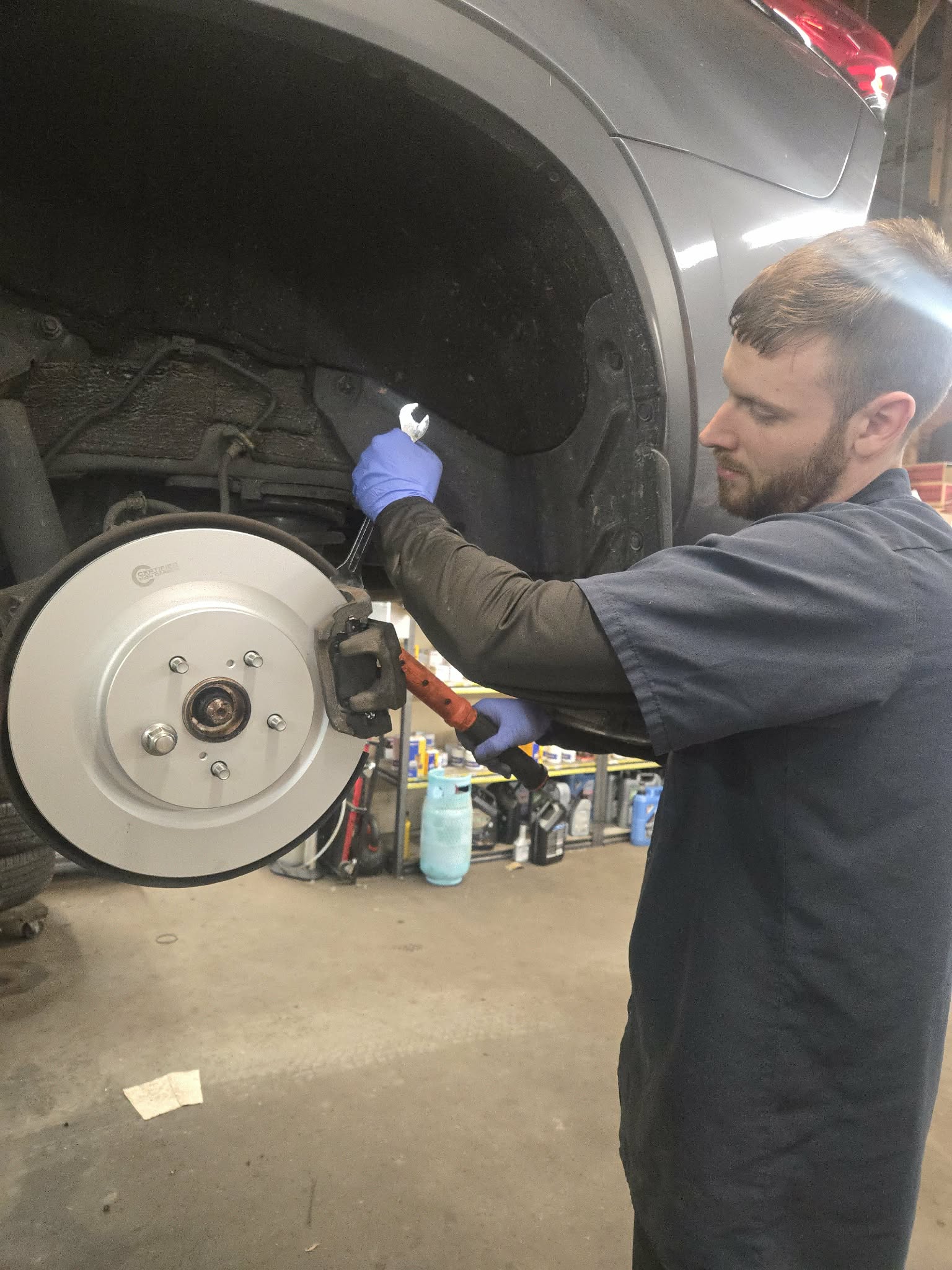
If squealing has progressed to a metal-on-metal grinding or growling sound, the pad material has likely worn through completely. The steel backing plate is now contacting the rotor directly. This damages rotors quickly and reduces your stopping power significantly. What might have been a straightforward pad replacement becomes a rotor replacement too — and sometimes a caliper job on top of that. Don't wait on this one. Braking systems are among the components assessed against B.C.’s inspection standards.
3. A Soft or Spongy Brake Pedal
A healthy brake pedal feels firm and consistent the moment you apply pressure. If yours feels soft, spongy, or sinks closer to the floor than usual before the brakes engage, something is wrong with your hydraulic system. It could be air in the brake lines, a brake fluid leak, or a failing master cylinder. Any of these compromise your ability to stop in an emergency. Get it diagnosed immediately. If it's been a while since your brake fluid was serviced, that's often a contributing factor worth looking into.
4. The Vehicle Pulls to One Side When Braking
If your car drifts left or right when you press the brake pedal, the braking force isn't being applied evenly. Common causes include a seized or sticking caliper, uneven pad wear, or contaminated brake fluid on one side. Beyond the safety risk, the uneven forces put extra strain on your suspension and steering components, which adds to your repair costs down the road.
5. Vibration or Pulsing Through the Pedal
A brake pedal that pulses or vibrates underfoot — especially at highway speeds — almost always means warped rotors. Rotors warp when they're exposed to intense heat and then cooled unevenly. Aggressive driving, riding the brakes on long downhill grades, or even rapid cooling (like hitting a puddle right after a hard stop) can cause it. Warped rotors are easy to diagnose and usually straightforward to fix if caught early.
The Bigger Picture
Brake jobs are one of the most cost-sensitive repairs there is. Catch it early — just pads — and you're looking at a reasonable job. Leave it until you've worn through the rotors and the cost can triple. And if a caliper seizes because of neglect, you're adding another few hundred on top of that.
We inspect brakes on every vehicle that comes through our door. Not to upsell you, but because we think you deserve to know the actual condition of your vehicle. If your brakes are fine, we'll tell you. If they need attention, we'll show you exactly what we found and give you an honest quote.